Keeping a Story Alive: A Review of the Novel “A Figure of Speech”
I. Method
How do you review a book? I’ve done it a couple times on Amazon, but I’ve never had a professional tell me if I were doing it correctly, nor a reader who gave me feedback on whether my review was helpful to him. I can only base this review on my own experience with reading reviews, and what I’ve found is that there are three primary things that tell me if I’ll like a story or not:
1. What’s the genre? (Fantasy, literary, drama)
2. What’s the tone? (Comedic, warm, cynical)
3. Does it have a happy ending?
You cannot possibly express to someone the quality of a book, assuming the author’s writing is up to snuff and there are no critical errors in pacing, characterization and the like. At some point, the book is well-written, and the only thing to ask is whether it’s the sort of thing that will appeal to certain persons.
So what I’m going to do here is not try to convince you that it’s well-written, or that it has good pacing or characterization, even though all of those things are true; I’m going instead to impress upon you what kind of experience you might have reading it, and if it sounds like a good time, then you can pick the book up at your discretion.
II. Spoilers
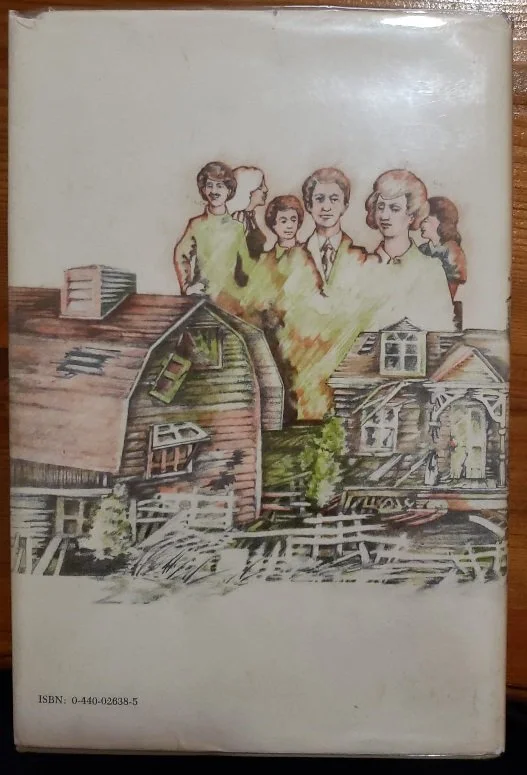
You can’t tell yet, but this whole book has now been ruined for you.
This isn’t the section of the review where I warn you of spoilers, this is the sentence in which I do that. This section is for spoiling.
Why spoilers?
Because lately I’ve purchased multiple books based on other people’s search for stories they read years ago. On Reddit, there’s a sub-forum called /r/What’sThatBook. When someone can’t recall a story they read a long time ago, they make a post there in the hopes that some kind, well-read soul will recognize it based solely on half-remembered cover art, vague recollections of events and character names, or by a dubiously recounted premise.
Through this I discovered that I actually don’t care about spoilers. For one, if the characters all live at the end, good! If the characters die, then I don’t want to read the book anyway because I don’t care for sad endings. I have no desire to feel bad about fake characters when I can feel bad for all the people in my life who have enough sorrows to fill warehouses. You might find some kind of pleasure in the character you followed for 300 pages passing away, but I don’t, so if you’re recommending me a book, just start with that: Does it have a happy ending?
To be clear, a character dying is not necessarily always a completely sad thing, and a heroic death in the end can be a solid conclusion. I’m referring specifically to sad things happening sadly that make you sad.
Moreover, spoilers mean that you can tell me all those crazy, juicy details that most people wouldn’t want to ruin. Once a story is spoiled, you can excitedly anticipate these story elements. You don’t have to wonder, “Is this book going to go anywhere?” since you’ve already been thoroughly educated on that very thing.
So with all that said, here’s the deal:
I think that A Figure of Speech ends exactly how it should have, as far as the main character, Jenny, and her grandfather are concerned. It’s a bit more dramatic than I would have expected, but based on the way an old cuss like him would have wanted to spend the last of his life, it makes sense. What I don’t like is the last page.
III. The Setup
Let’s get into the meat of this review. Here’s the blurb:
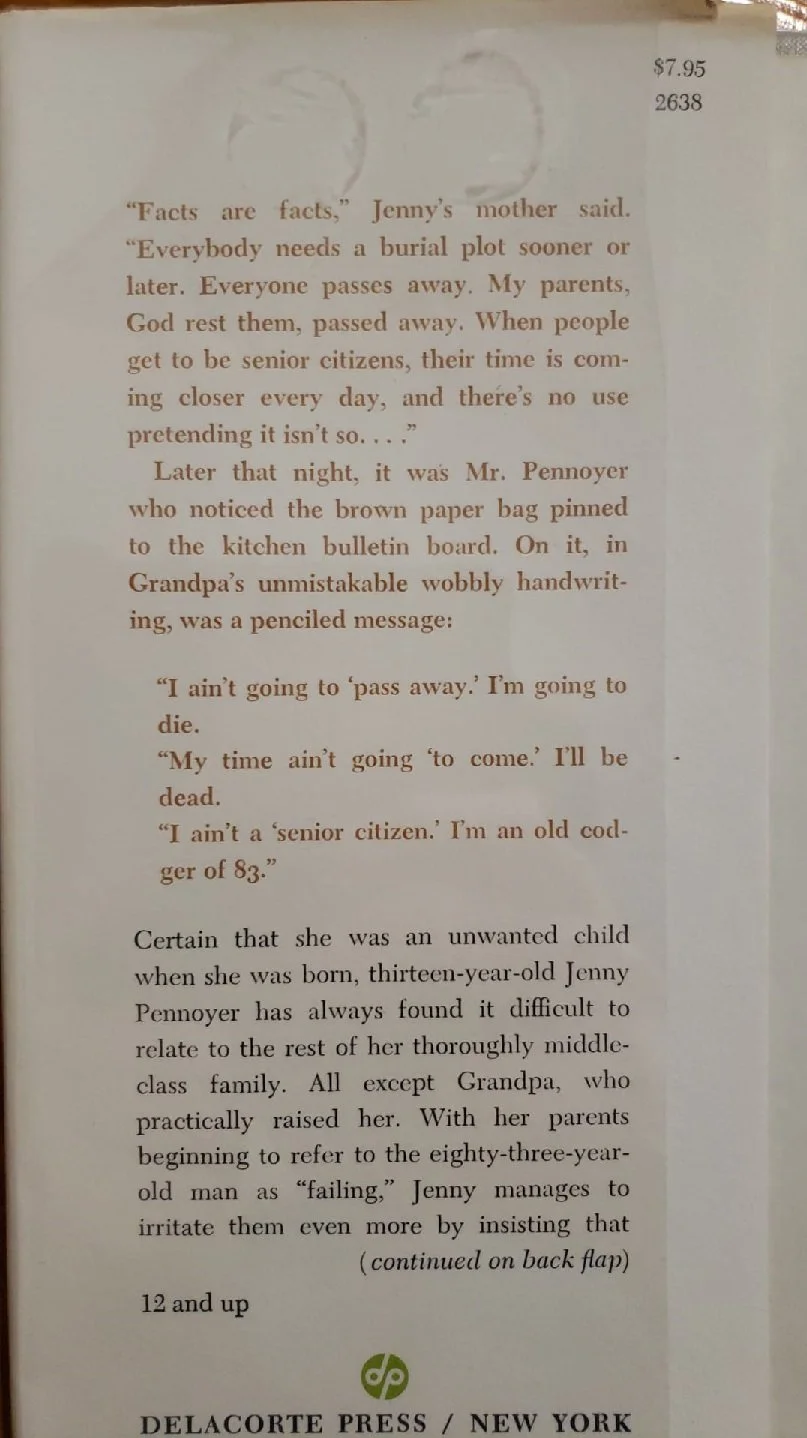
Back flap? Uh, oh, um. Hang on. Let me just. . . O.K., here it is:
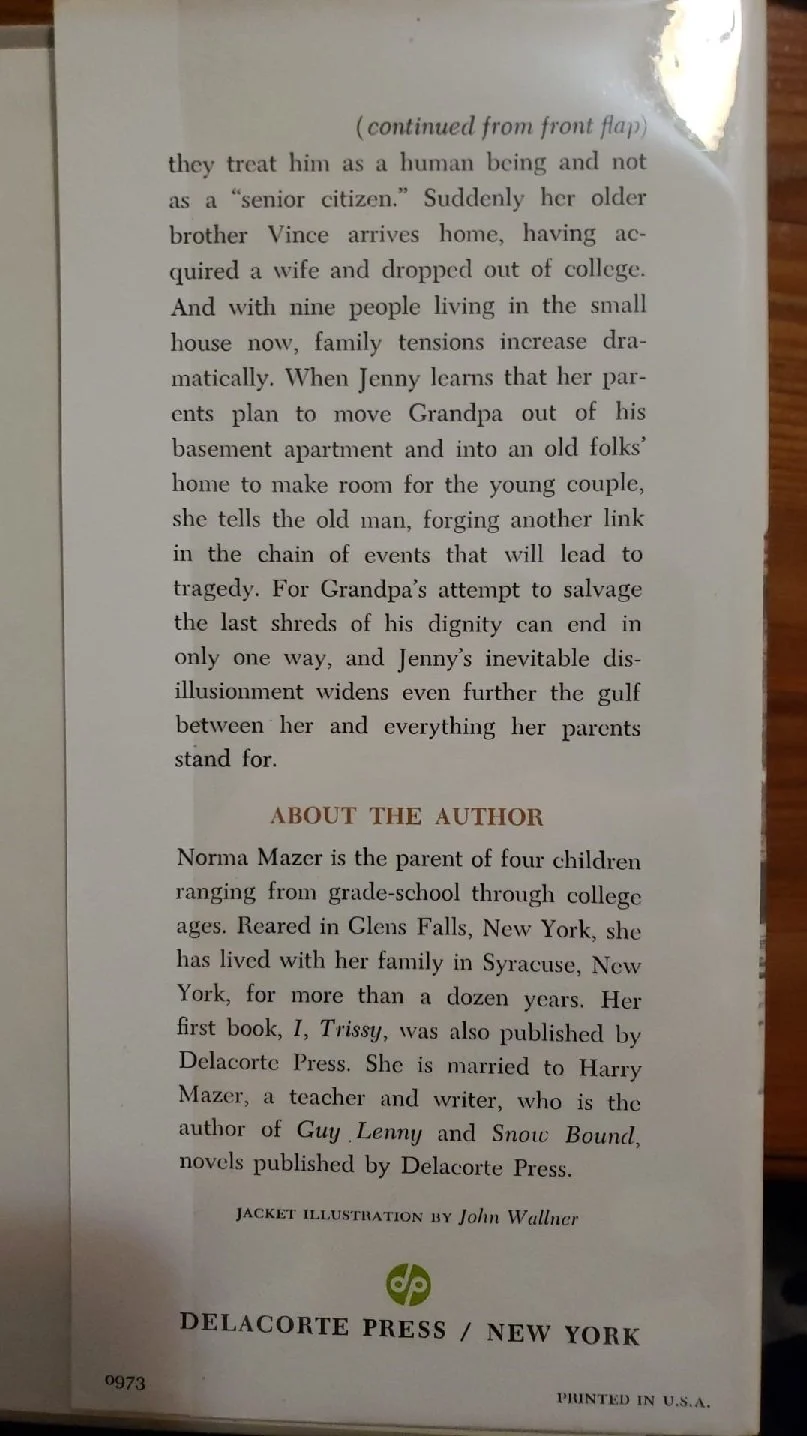
Alright, wow. Uh. Y’know, for all my talk about spoilers, I probably should have actually read the blurb. This pretty much tells you every single major plot point in the book, hints at the “tragic” penultimate event, and even tells you what happens on the last page:
“Jenny’s inevitable disillusionment widens even further the gulf between her and everything her parents stand for.”
Geez, I feel kind of useless.
Here I am blathering on about snubbing generations of tradition by opening a review with spoilers, when the book’s own dust-jacket flaps basically recapitulate the entire story from the first page to the last. Every plot twist from the brother dropping out of college and returning home with a wife, to the parents trying to get the grandfather into an old folks’ home, to inevitable tragedy to Jenny’s disdain for her own parents on the very last page of the book, this blurb has you completely covered with an honest forewarning of every significant event.
Well, uh, um, if that sounds interesting to you, then, well, there you go. You even have a bit of writing example on the first flap.
IV. This Review Has Taken a Nose-Dive
Honestly, I feel like almost everything I might have said about this story has been captured adequately in the blurb.
I was going to talk about the tone of the book, but the blurb perfectly describes it. If you’re still unsure, here it is:
Cynical. Jenny’s father doesn’t listen to her and calls her big-mouth. Jenny’s mother doesn’t listen to her and acts like your classic soccer-mom: I’m right because I’m Mom, not because I have experience or logic that I could impart unto you that would equip you to understand the world and engage with it. Her siblings are obnoxious and uncaring.
Everyone treats the grandfather like he’s an imposition, or an annoying child, or senile, regardless of how intelligent he clearly is based on his writings on a bulletin board they kept up in the house. (A good idea, actually. I might get one of these.)
None of this ever changes, and right up to the last page, people are either hypocrites, self-absorbed or indifferent. If you take all this as being from the perspective of Jenny, a 13-year-old girl (or thereabouts) then it makes sense insofar as kids oftentimes think no one understands them and they can’t appreciate the oftentimes morbid doldrums of reality. Jenny’s parents routinely say very logical things throughout the story, but they do things underhandedly as well. For instance, they pull the grandfather up out of his basement accommodations in the family home to do some renovations, only to move in Jenny’s brother and sister-in-law under his nose. Then, later, they have some garbage men or something come in and take away all of Grandfather’s stacks of old, practically vintage newspapers that he liked to read, and threw out one of his old coats that was his favorite.
”Well, no one’s perfect.”
Yeah, but the book could have gone less heavy-handed with how inconsiderate the whole family was. It makes hints that the family does indeed care about both Jenny and Grandfather, but it’s one of those types of “caring” where you don’t want them to get hurt, but you always act like they’re imposing on you. I’d rather be dead than an imposition, no matter how much those upon whom I’m imposing insist that they love me.
So it’s a cynical, miserable take, albeit probably realistic, and when it ends you’re not happy for anyone or anything.
Wretched.
I realize that the more I talk about this book the more irritated I become at it. I wasted my time reading it because the tone the author was going for was never going to be something that I enjoyed. The first two chapters even come off as exactly the kind of thing I wanted, showing how much Jenny and her grandfather love each other. I thought this was going to be a feel-good story, not a raw, ugly look at the worst of middle-class America.
If only I had read the blurb.
V. In Closing
To be fair, there were a few moments of positive poignancy, a few little lessons in love, dying with your boots on, retaining your dignity to death rather than live a pampered, pathetically prolonged existence that sees you slowly fade to uselessness, burdening everyone until their visits become sparse and when they do visit it’s only to look at you with the guilty hope that you just die already.
It’s something we all will have to face in one way or another, to whatever degree, one day. I just didn’t need to read it right now.
In preparation for this review, I made some notes as I read the book. Here’s the first one I made:
Perhaps it’s because I already know the direction the story is likely to take, based on the spoilers from Reddit, but the book’s first two chapters elicited a surprising amount of emotion from me, in particular the second chapter that was from the grandfather’s perspective. Quirks of his personality and interactions with his granddaughter remind me much of myself and my interactions with my girlfriend.
That’s right, this is a glimpse into a younger, more naïve me, one who was hopeful of the future, tackling the story with both hands on the pages, nose-to-text. Eager.
If only I had read the blurb.
But then, I’m only now realizing, perhaps I’ve done exactly what I promised at the beginning. I’ve expressed exactly the kind of experience that you might have when reading this story.
So, yeah! If that sounds like your thing, go pick you up a copy.